






















by Dr Thomas Chong
Emerging jobs in the new century aren’t built in sterile labs or high‑tech boardrooms alone. I humbly suggest that they are born the same way a good Malaysian meal is born — through curiosity, experimentation, precision, and the courage to blend old wisdom with new techniques.
And if Malaysia wants a future-ready workforce, then research and data analysis must sit at the same table as welding, culinary arts, automotive repair, hospitality, and every other TVET pathway. After all, in today’s world, even our favourite nasi lemak stall auntie is doing data analysis — she just doesn’t call it that.
After all, the world now runs on data, not unlike how a kitchen runs on ingredients. Let’s think of data as the “NASI”, the rice, of the modern economy. Without it, nothing else comes together. Every emerging job — from that of a renewable energy technician to drone operator to digital tourism specialist — can hinge on one’s ability to
- note patterns,
- assess assumptions,
- specify outcomes, and
- improve processes.
That is research.
To make sense of what we note or observe, we’d need to analyse data. The role of data analysis cannot be over-stated. Just like a chef who tastes, adjusts, and refines, the modern worker must know how to collect information, interpret it, and make decisions grounded in evidence. After all, the humble roti canai master also does micro‑research even though he may not even talk about it in that lingo. For him, it comes naturally to ask: “How many customers come on weekdays? Which fillings (egg or onions) sell fastest? Should I introduce roti sarang burung because the TikTok crowd likes runny eggs?” He is doing demand forecasting, product testing, and customer segmentation — the same skills required in Industry 4.0. If our mamak stall can evolve, so must our TVET system.
Emerging industries demand hybrid skills — like fusion food done right
The new century doesn’t reward people who know only one thing. It rewards people who can blend skills, the way Malaysians blend flavours. To illustrate, a drone technician who can also analyse crop‑health data becomes a precision‑agriculture specialist. A hospitality trainee who can interpret guest‑experience analytics becomes a hotel innovation lead. A manufacturing technician who understands machine‑learning dashboards becomes an Industry 4.0 supervisor. Allow me to offer this as the “nasi kandar” principle: You don’t just take one lauk (dish). You mix. You match. You elevate. TVET must do the same.
Indeed, research and data analysis are the sambal that ties everything together — the base flavour that makes every other skill more powerful, giving much ‘oomph’!
TVET must evolve — because the economy has already evolved
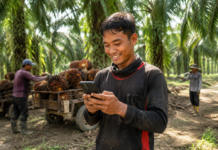
Malaysia’s TVET system has always been strong in hands‑on mastery. But the new century demands hands-on plus minds-on. Therefore, a barista or café owner today must understand customer analytics, inventory forecasting, digital loyalty systems and sustainability metrics. Similarly, the more effective solar technician must understand environmental impact data, energy‑yield modelling and predictive maintenance algorithms. Or a tourism trainee must understand visitor‑flow analytics, digital behaviour research, and experience‑design metrics. This is not “extra” or optional. This is part of the growing job requirements.
TVET must stop treating research and data analysis as “university things”. They are workplace things. They are future‑proofing things. They are Malaysia’s competitiveness things.
Research and data analysis empower workers, the waySAMBALempowers a meal.
When workers understand data, they stop being passive executors and become active contributors who can
- Suggest improvements
- Advocate and justify innovations
- Manage and negotiate better
- Behold market realities
- Analyse and leverage data
- Lead in decision‑making
This is how we might uplift B40 youth, empowering rural communities and building a confident, future‑ready workforce. Indeed, by improving their skills, opportunities, and long‑term economic mobility, we can enable youths from Malaysia’s Bottom 40% income group (B40) to rise out of structural poverty. An interesting saying is: Give a trainee a skill, and he can work. Give him research and data literacy, and he can grow. It is the difference between eating plain rice and eating nasi lemak with sambal that wakes up the soul.
TVET must serve the full Malaysian meal
If Malaysia wants to thrive in the new century, TVET cannot serve only the “main dish” of technical skills. It must also serve the “side dishes” (may I add, with REMPAH) that make the meal complete e.g.
- Research and digital literacy,
- Experimentation,
- Meta-data analysis,
- People skills,
- Agile learning, and
- Higher-order thinking.
These are not luxuries. They are not academic ornaments. They are the essential ingredients of every emerging job. Just as a good bowl of laksa needs broth, noodles, herbs, and spice, a good TVET graduate needs both technical mastery and analytical capability.
Malaysia’s future workforce must be like our food: bold, adaptable, innovative, and proudly rooted in tradition and values yet future-ready.

